
What Is Debt Syndication, and When Does a Mid-Market Company Actually Need It?
A business usually starts with one banking relationship. One bank, one loan, and a simple borrowing structure.
As the business grows, so do its funding requirements. A new plant, a larger working capital cycle, or an acquisition often requires more capital than a single lender is willing or able to provide.
That’s where debt syndication comes in.
Instead of depending on one bank, the funding requirement is structured across multiple lenders under a common set of terms. Each lender participates in a portion of the facility, while the company deals with a coordinated financing structure rather than negotiating separate loans independently.
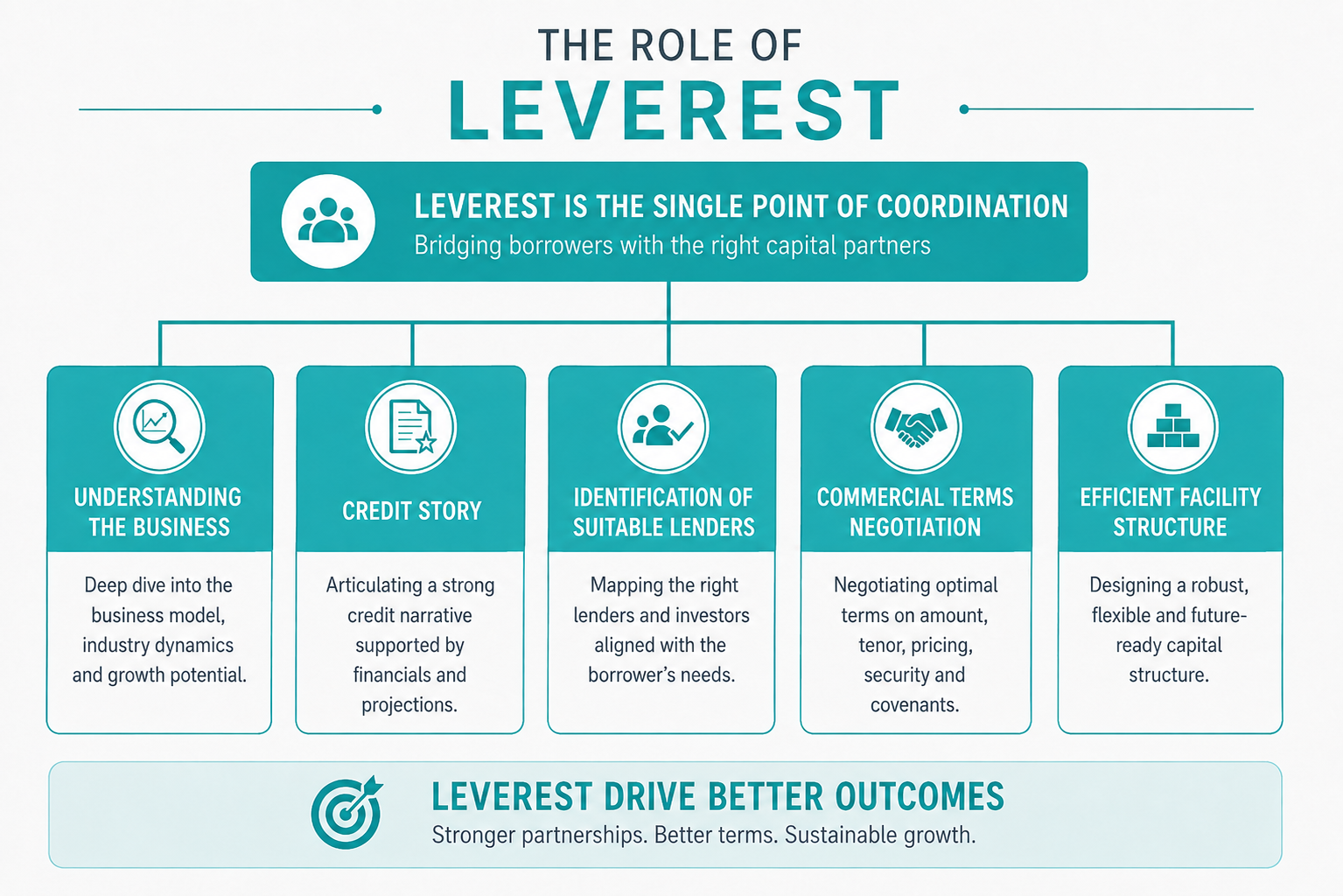
The role of the arranger is to bring this together—understanding the business, preparing the credit story, identifying suitable lenders, negotiating commercial terms, and ensuring the facility is structured efficiently.
In simple terms, a single lender finances the business; debt syndication builds the financing solution.
Why a Company Turns to Debt Syndication
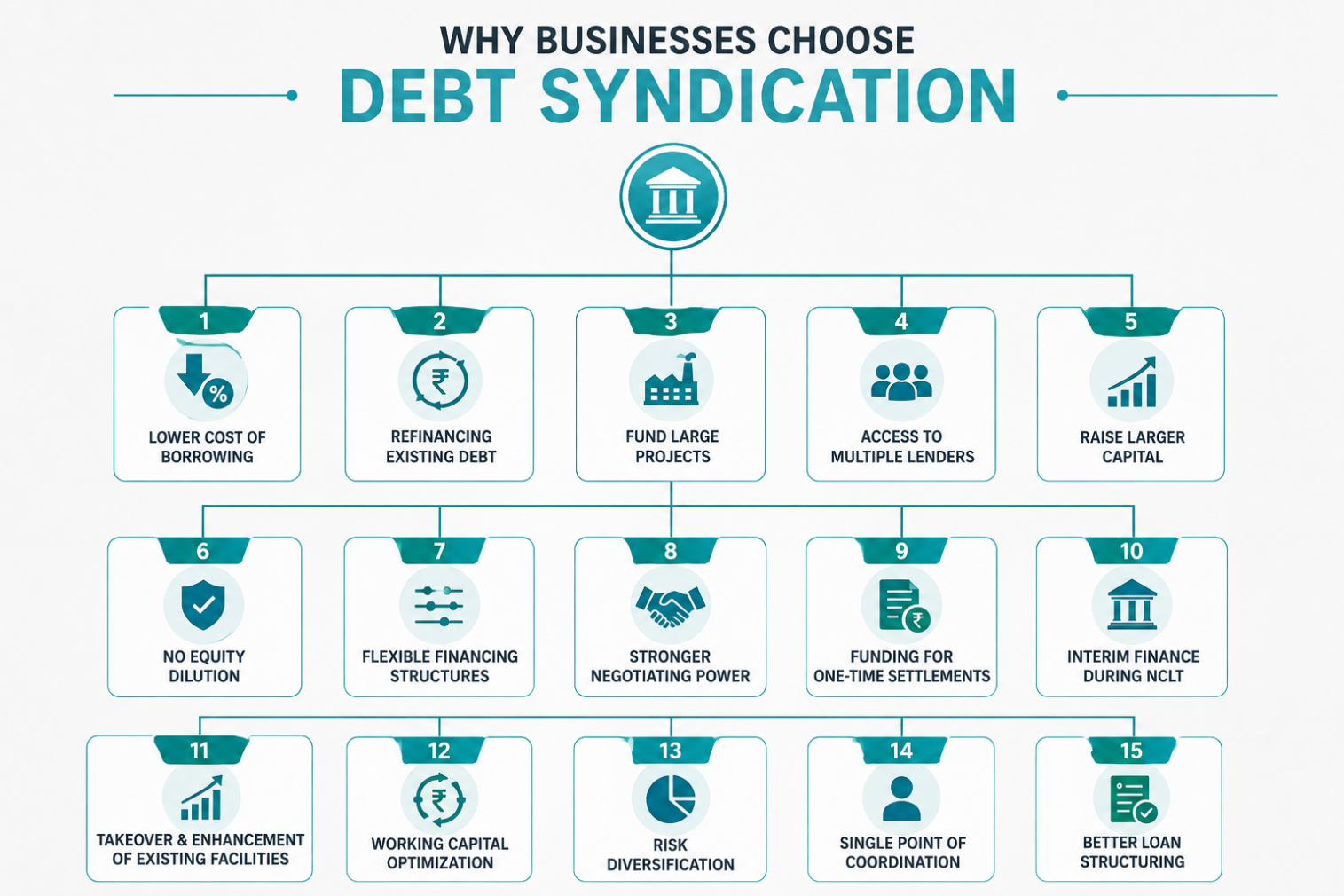
A company turns to debt syndication when its funding needs outgrow what a single lender can provide, whether due to regulatory limits, risk concentration, or the sheer size of the requirement.
How the Syndication Process Is Managed End to End
How Debt Syndication Works
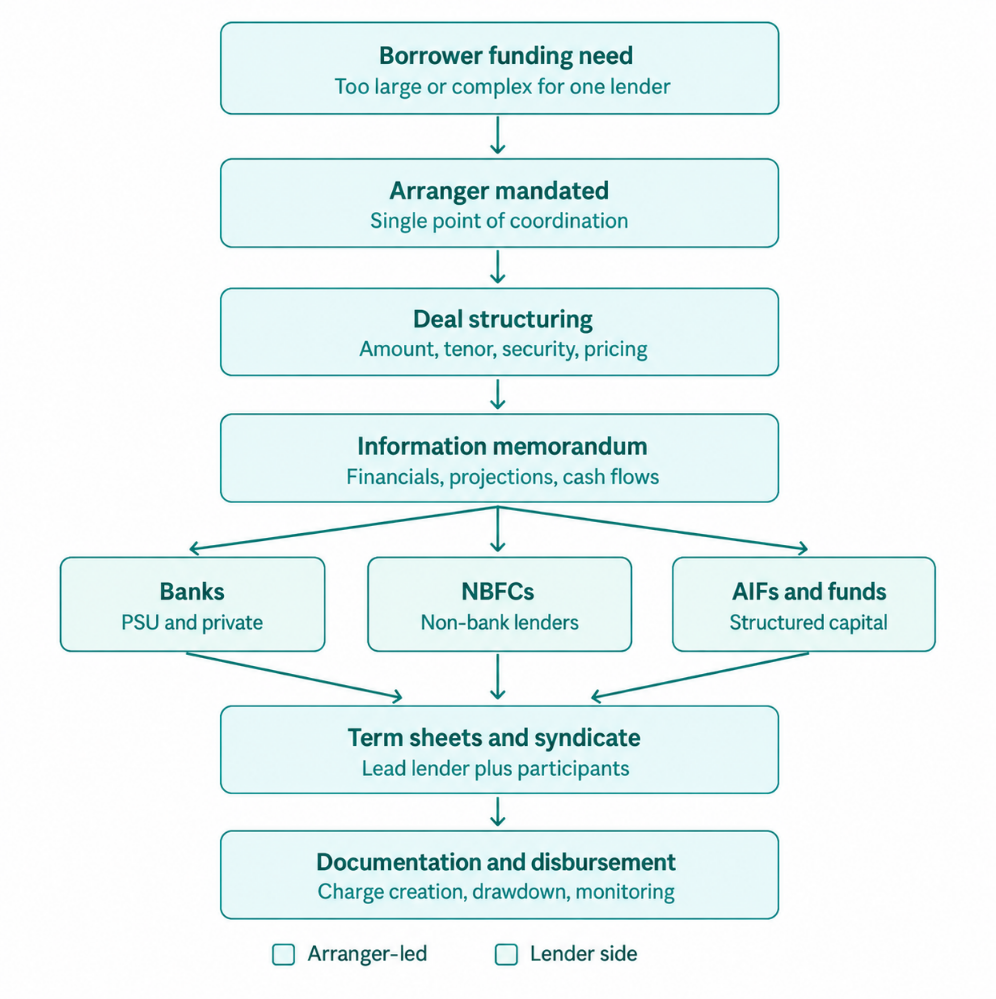
1. It starts with a funding need
A company needs funding for a project, capex, or refinancing. But the requirement is too large for one lender or too unusual for one balance sheet to carry. That is where syndication begins.
2. Leverest steps in
The borrower appoints Leverest through a mandate letter, setting out the amount, fees, timeline, and whether the Financing Advisor is committing to the full amount or working on a best-efforts basis. From here, the borrower has one point of contact instead of approaching lenders individually.
3. The deal takes shape
Before approaching lenders, the Financing Advisor builds the structure: amount, tenor, moratorium, repayment schedule, security, pricing, and covenants. Much of the real work happens here, because a weak structure rarely survives credit scrutiny.
4. The story goes on paper
The Financing Advisor prepares an Information Memorandum covering the promoter, financial history, projections, debt-servicing cash flow, security cover, and proposed structure. This becomes the foundation for lenders’ credit appraisal.
5. Lenders come to the table
The Information Memorandum reaches lenders suited to the deal: banks for competitive pricing, NBFCs for speed and flexibility, and AIFs or credit funds for mezzanine, subordinate, or structured financing. The borrower has one conversation; the Financing Advisor manages the many conversations behind it.
6. The syndicate comes together
Interested lenders submit term sheets. The Financing Advisor compares pricing, tenor, security, covenants, and conditions, then negotiates them into a common structure. One lender typically leads, while others participate by taking a share of the exposure.
7. Funding closes, and the work continues
Loan agreements are signed, security is created, charges are registered, and conditions precedent are cleared. Disbursement may follow project milestones rather than happen all at once. Even after funding, covenant testing, security perfection, and lender reporting continue throughout the loan.
The Challenges Borrowers Should Weigh
Complex documentation and legal structure: The funding may be agreed, but the paperwork has only begun. Loan agreements, intercreditor terms, security deeds, and guarantees must all be negotiated across parties, making the process longer, costlier, and demanding close legal and compliance oversight from start to finish.
Coordinating multiple stakeholders: One lender is one conversation. Several lenders mean several voices. Different views on terms can slow reporting and decision-making, making patience, coordination, and careful planning essential to keep everyone aligned.
Concentration risk within the syndicate: A syndicate can spread the debt but not always the risk. If a few lenders hold most of the exposure, one lender’s exit or tougher stance can disrupt the entire facility. A well-built syndicate looks beyond how much is raised to how the exposure is distributed.
Intercreditor Conflicts: Senior and subordinate lenders fight over collateral priority, payment waterfalls, and voting rights.
Bringing It Together
Debt syndication is not about loan size or status. It is a structural solution when a single lender can no longer meet a company’s requirements, whether due to ticket size, complexity, tenor, or growth ambitions.
Done right, it distributes risk, improves pricing through lender competition, aligns repayment with cash flows, and strengthens market credibility. At Leverest Financial Services, debt syndication goes beyond arranging funding. We design the right structure, bring the right lenders together, and manage execution end-to-end, creating financing solutions built for long-term financial value.