


Insights for Smarter
Financial Decisions
Practical perspectives on debt, structured finance
and capital strategy for growing businesses.
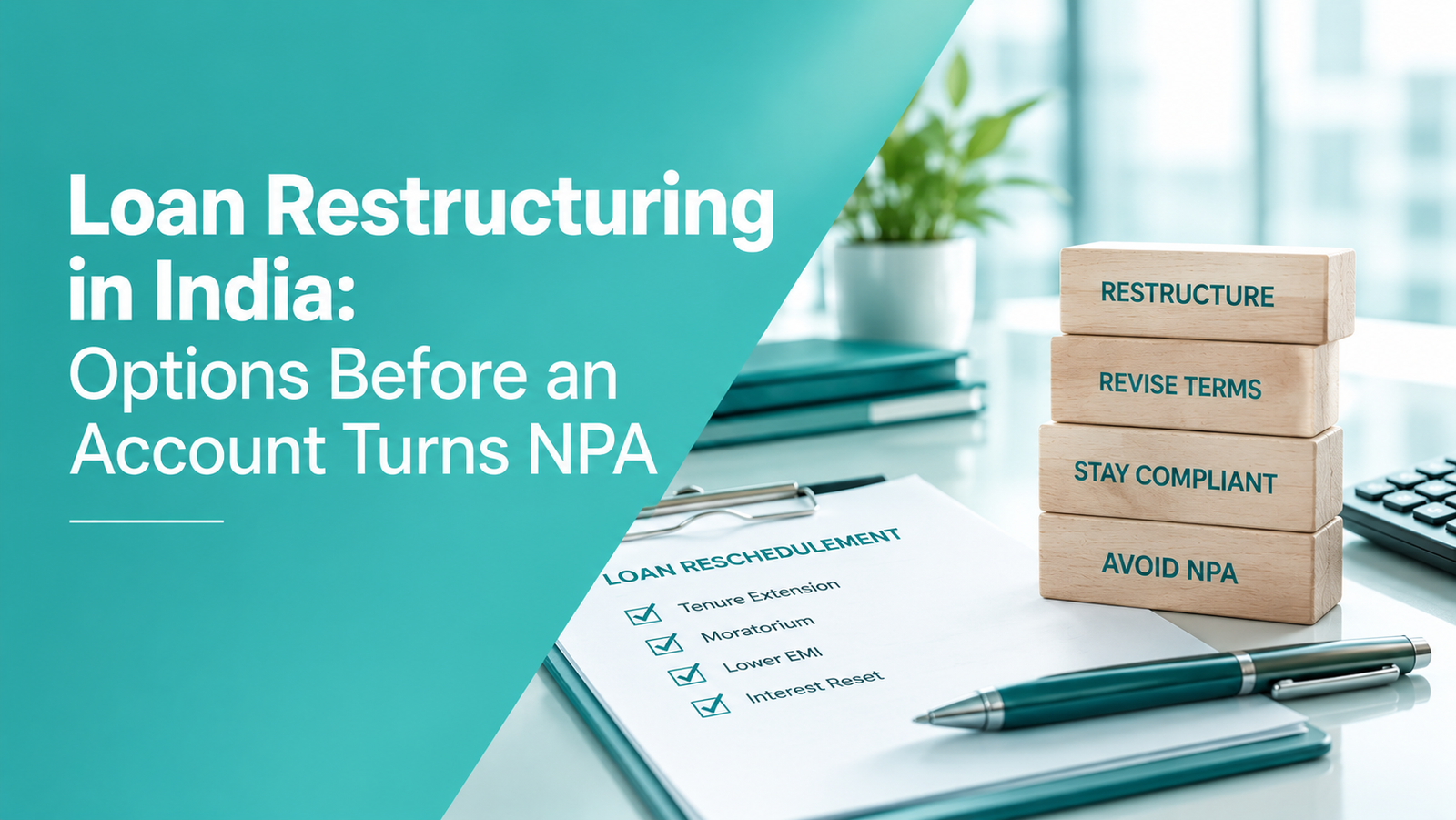
A loan account rarely fails overnight. It slips. The gap between the first missed payment and the ninety-first day is where loan restructuring in India actually works — and most borrowers arrive after that window has closed.
Read MoreNo articles found for .
Try a different keyword or category.
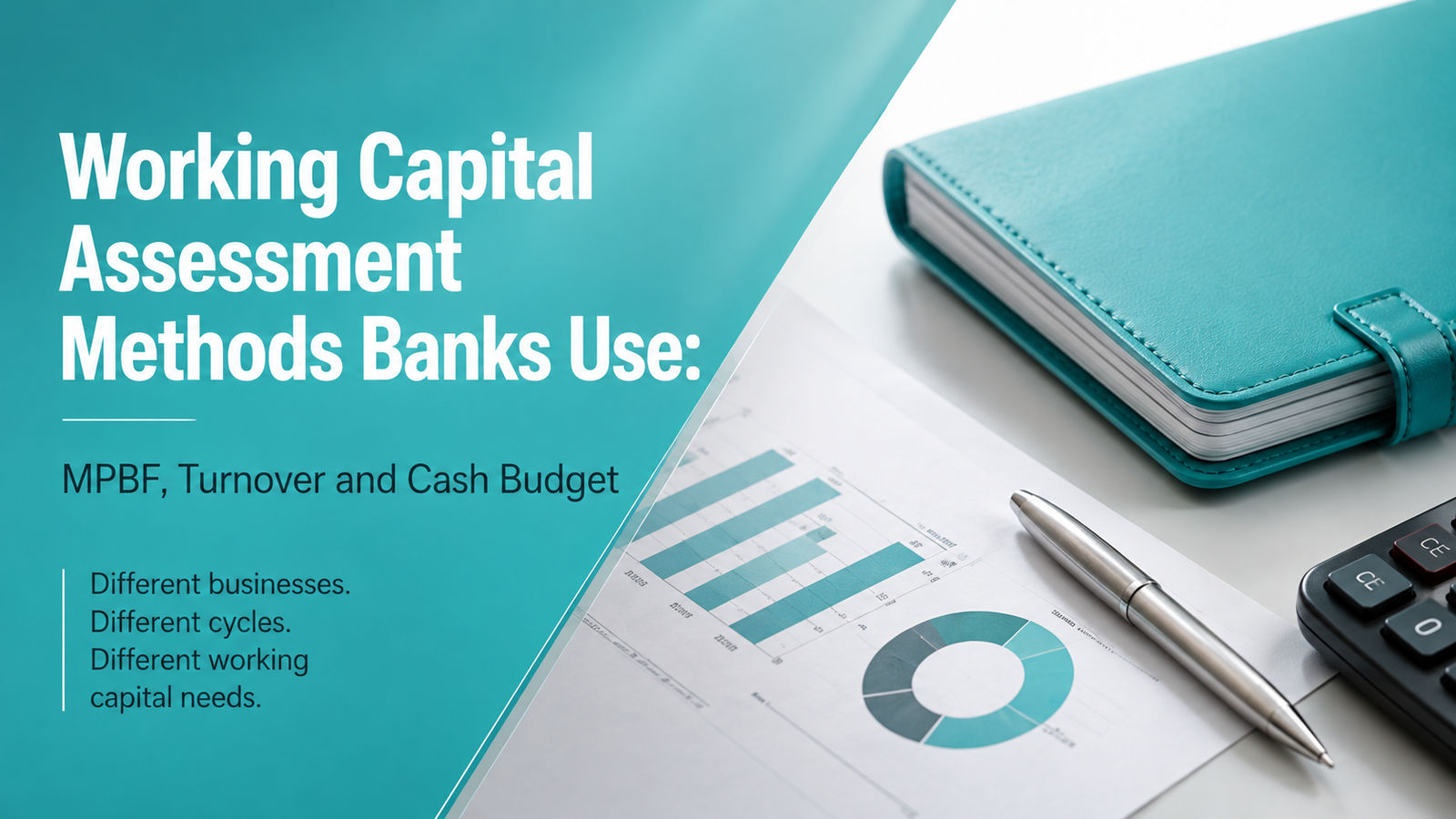
Two businesses can post the same Rs 20 crore turnover and still need completely different working capital limits. Because turnover alone doesn’t determine funding need — the operating cycle does.
Read More
Most promoters assume the Reserve Bank of India sets out exactly how a syndicated loan should be structured. In reality, RBI withdrew its formal rules back in 1996.
Read More
A business usually starts with one banking relationship. As it grows, so do its funding requirements — often beyond what a single lender is willing or able to provide.
Read More
Somewhere in India this week, a profitable company will walk out of a bank believing it was rejected because the business was not good enough. In reality, the bank simply could not understand it.
Read More
Your orders are healthy. So why is the bank balance always tight? Most growing businesses in India do not fail for lack of orders — they struggle because earned money is stuck in receivables.
Read More
The CGSMFI 2.0 extension did not get much airtime, but it lands where it counts — raising the loan ceiling for larger NBFC-MFIs from ₹300 crore to ₹1,000 crore.
Read More
Most founders chase venture capital first. The smart ones explore non-dilutive capital first — funding growth while keeping the equity they’ve already earned.
Read More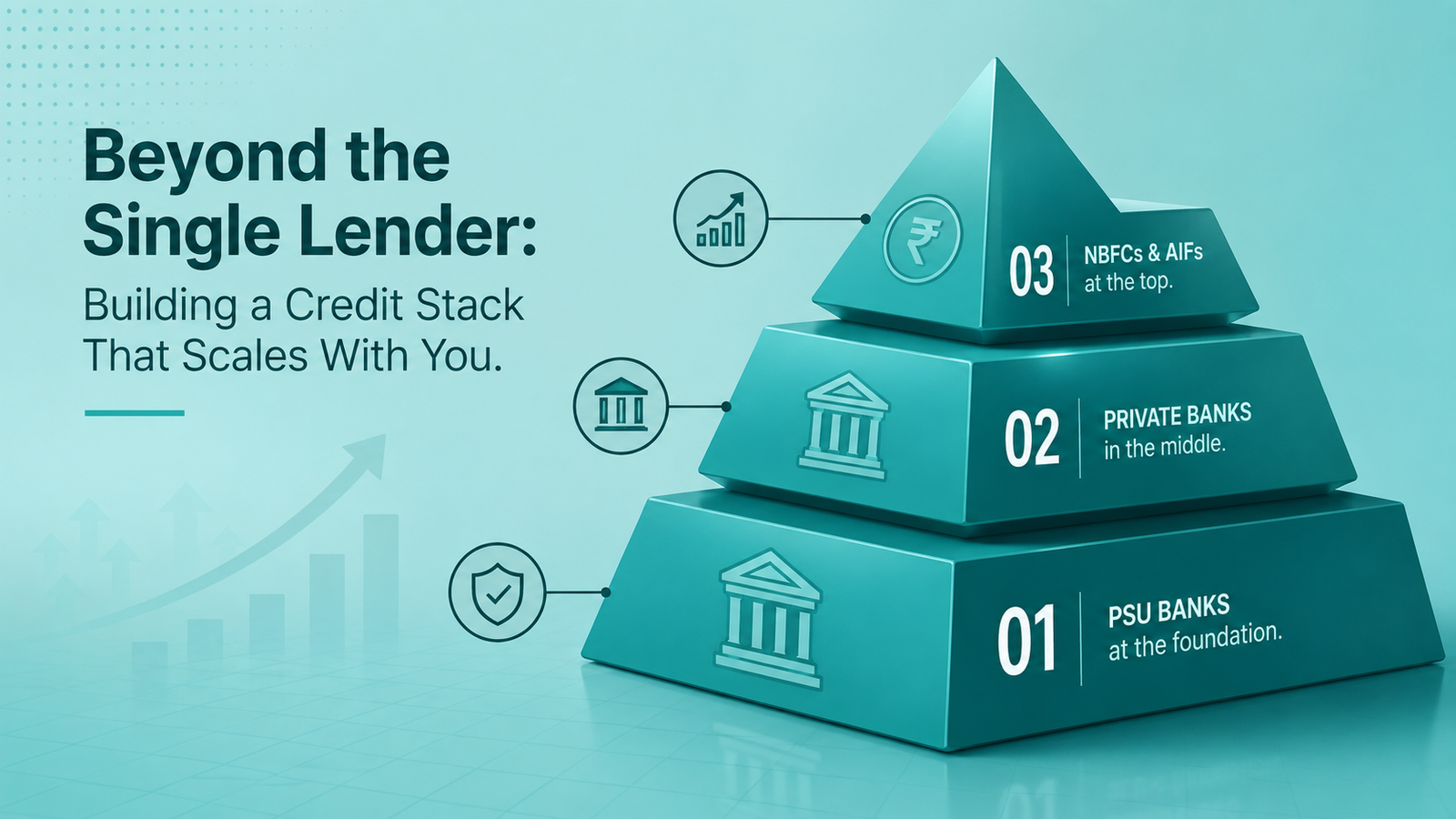
Most companies don’t choose their lenders. They accumulate them — one cash crunch, one new project, one bridge loan at a time. Here’s how to build a deliberate three-layer credit stack instead.
Read More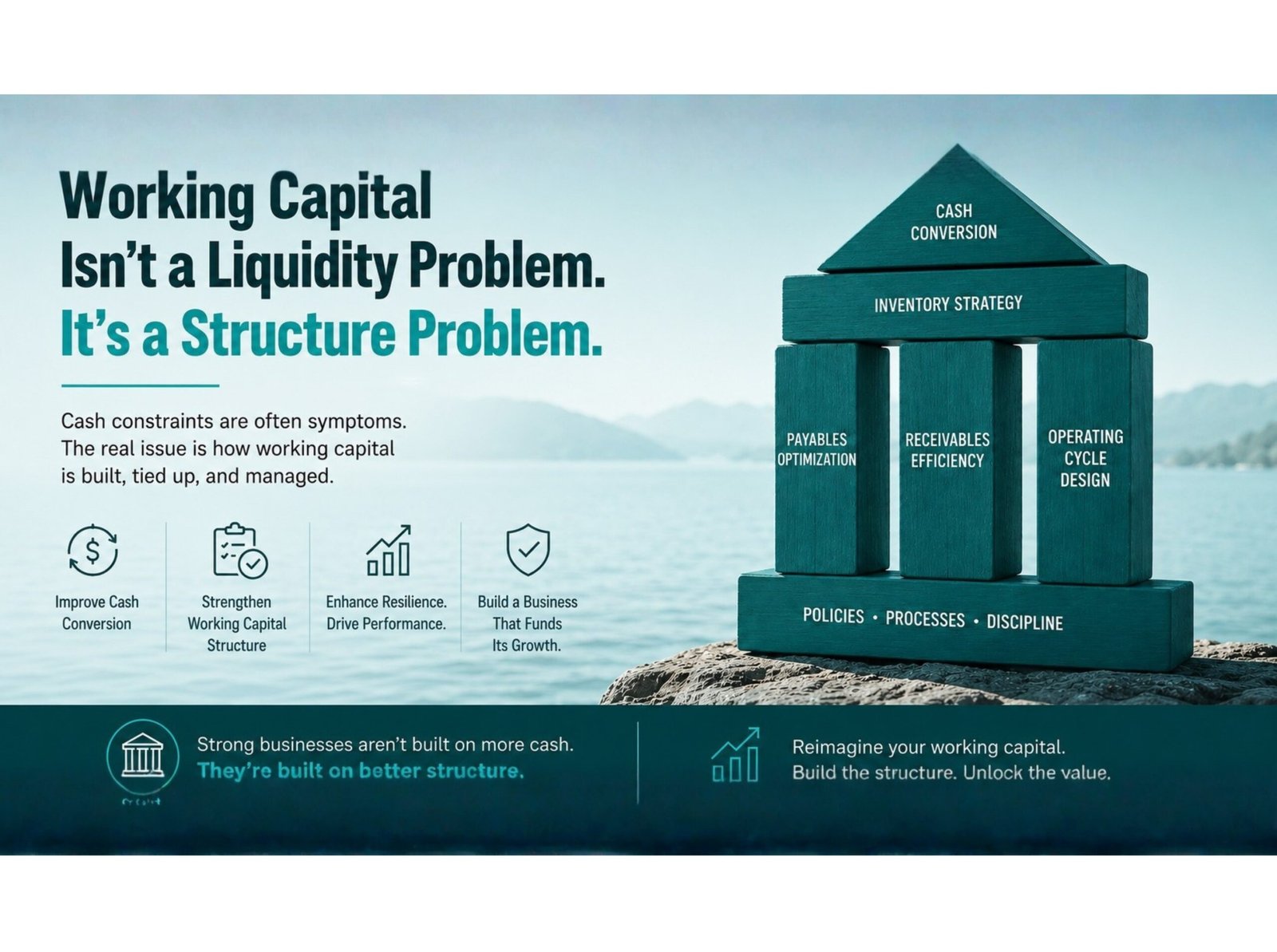
SIDBI pegs the MSME credit gap at roughly ₹30 lakh crore. The default response stays the same: extend the CC limit. A CC limit prices every rupee of working capital need identically — which it isn’t.
Read More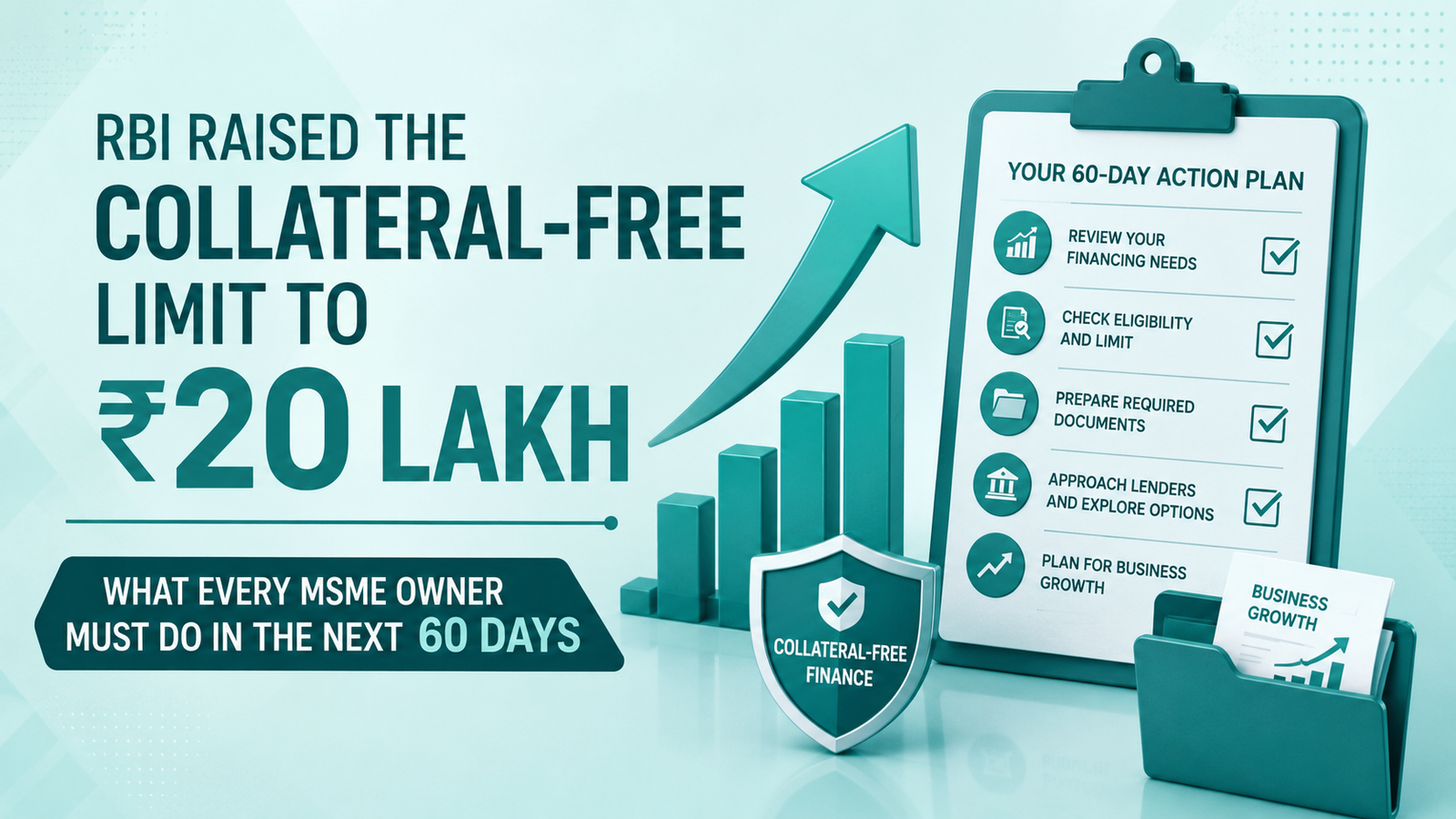
India’s MSME credit landscape just shifted. RBI’s revised circular lifts the collateral-free lending ceiling from ₹10 lakh to ₹20 lakh — doubling the ticket size accessible without pledging property.
Read More
Every year, thousands of Indian SMEs walk into banks with genuine funding needs and walk out empty-handed. Most rejections are not about the business — they’re about how it was presented.
Read More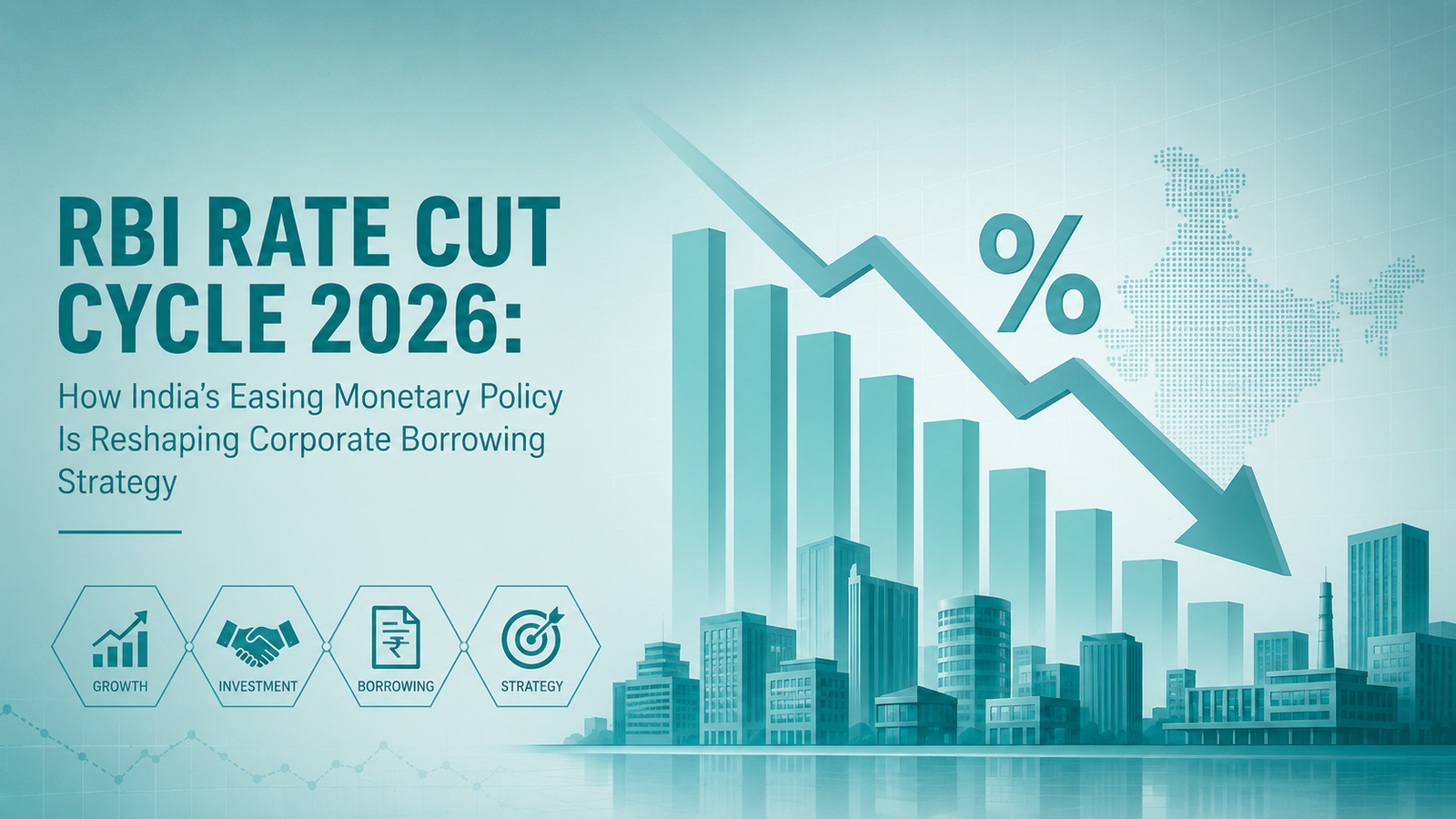
India’s monetary landscape has undergone a decisive transformation. A cumulative 125 bps in rate cuts brings the repo rate to 5.25% — one of the most aggressive easing cycles in recent memory.
Read More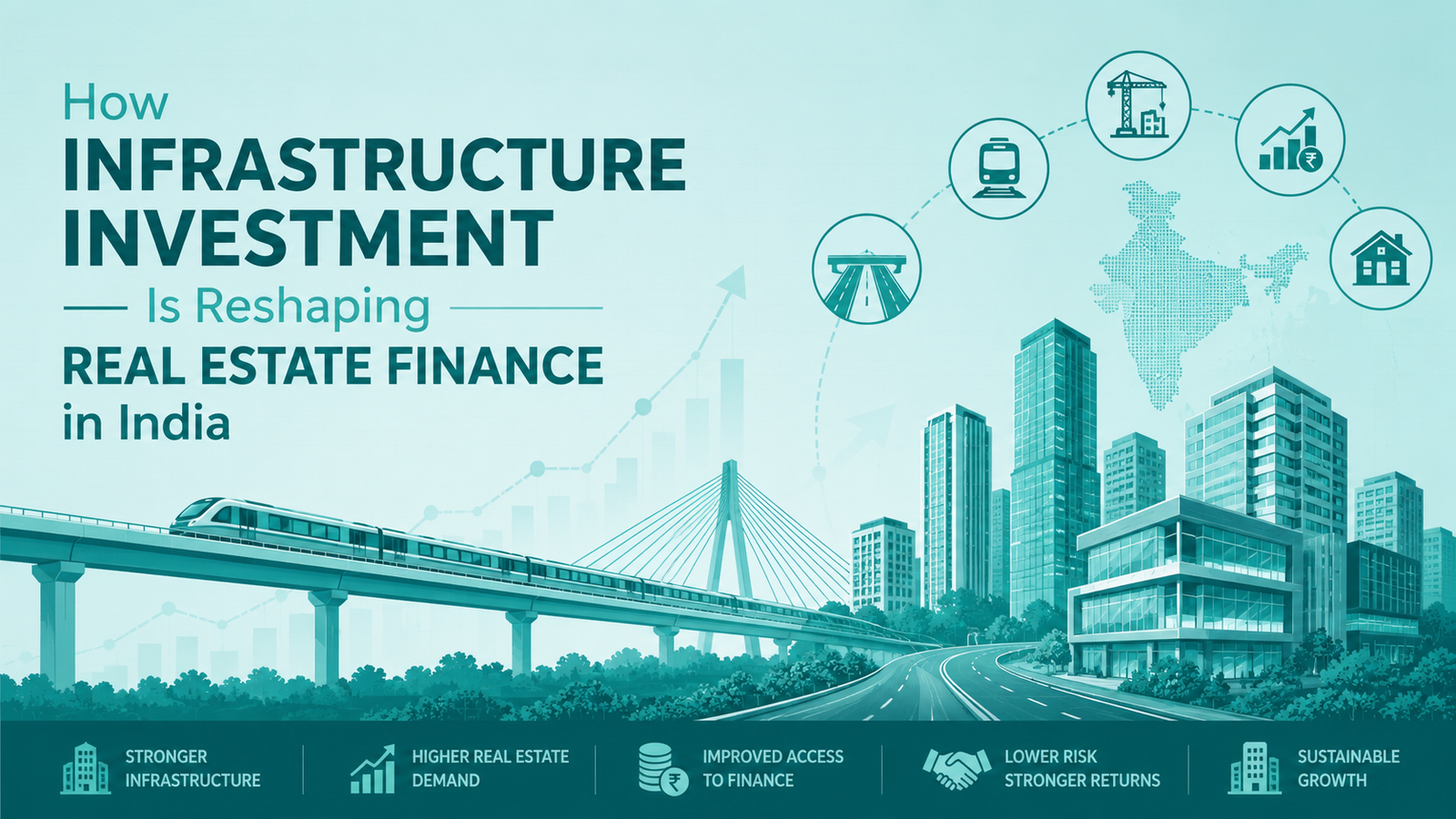
With ₹12.2 lakh crore in government capex and SEBI’s SM REIT framework lowering the entry threshold to ₹50 crore, the geography of real estate demand — and how developers finance it — is being actively redrawn.
Read More