
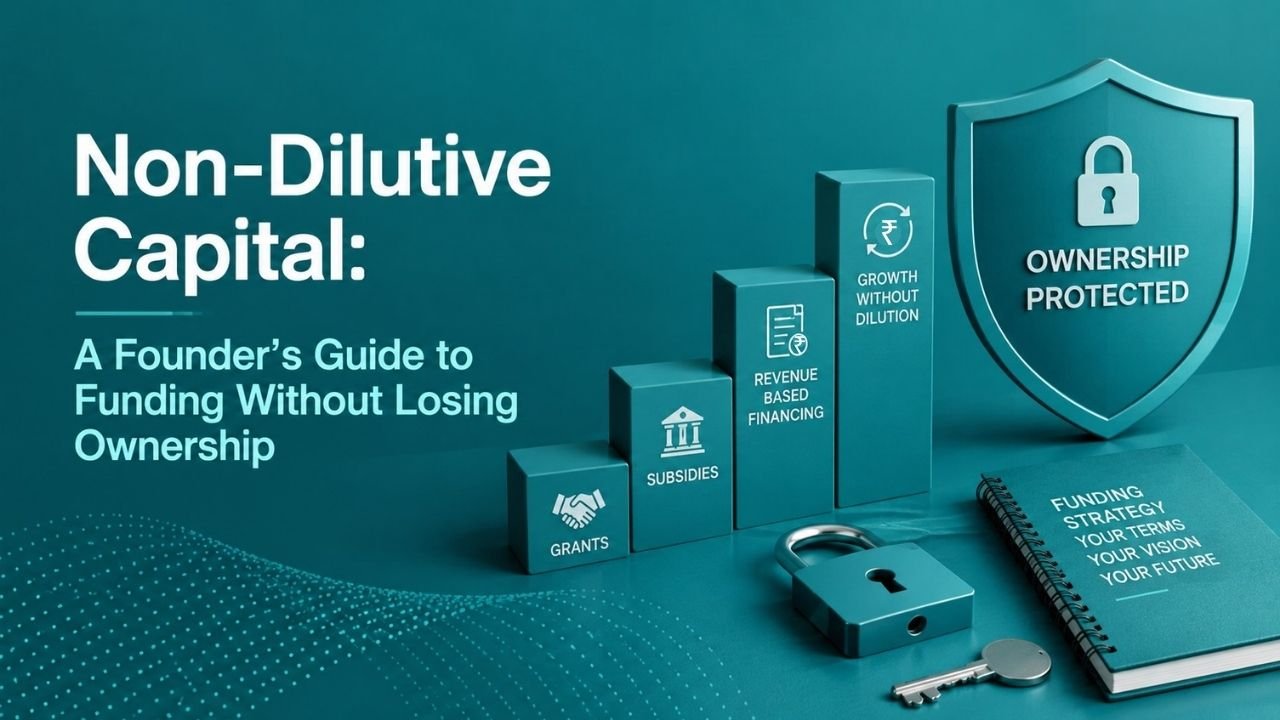
Non-Dilutive Capital: A Founder’s Guide to Funding Without Losing Ownership
Most founders chase venture capital first. The smart ones explore non-dilutive capital first.
Capital is the oxygen of a growing business. It funds product, hiring, working capital, equipment, compliance, and customer acquisition. Yet here is the uncomfortable truth: most of these are debt problems, not equity problems. Treating every need as a reason to raise equity is how founders quietly give away the wealth they are building. Non-dilutive capital flips that default. It lets you fund growth while keeping the equity you have already earned.
The default founder trap
The pattern repeats every week. A founder needs capital, chases investors, dilutes equity, then repeats the cycle at the next round. Five rounds in, the founder owns just 18% of a company they built from nothing
Every share given away today is wealth gone forever. Debt, used at the right stage, protects that ownership. Often, it is also faster and cheaper than the equity round it replaces.
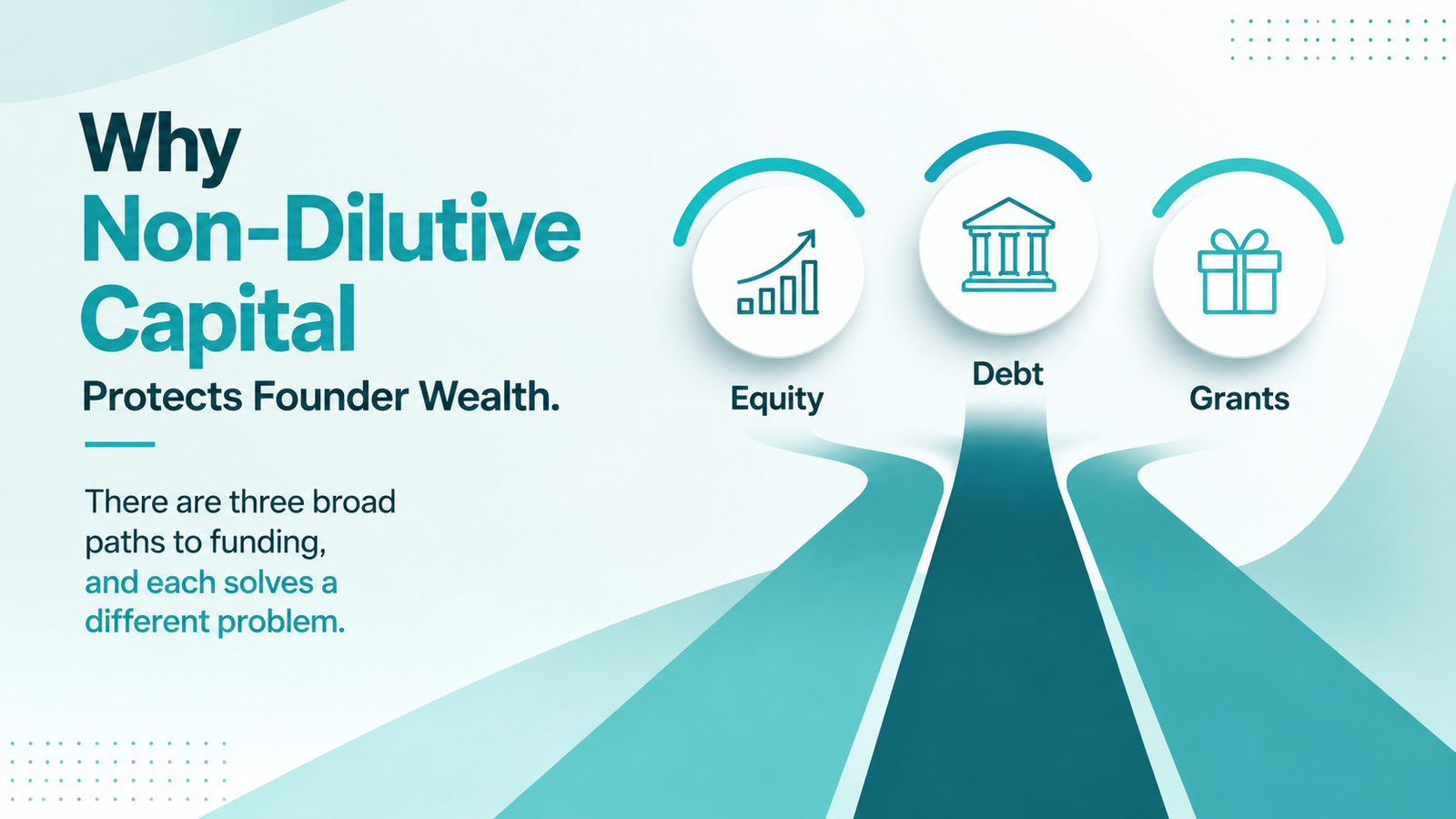
Why non-dilutive capital protects founder wealth
There are three broad paths to funding, and each solves a different problem.
Equity means ownership sold. There is no repayment, but the dilution is permanent. It suits pre-revenue ideas, long gestation, or capital-intensive scale.
Debt means ownership kept. You repay with interest, but you dilute nothing. It works best for working capital, capex, growth, and runway extension once revenue exists.
Grants are non-repayable. These government and institutional programmes are milestone-bound and often subsidised, yet founders consistently leave them on the table.
The lesson is simple. Match the instrument to the need, instead of defaulting to equity for everything.
The debt toolkit most founders overlook
Debt is not one product. It is a toolkit, and the right instrument depends on the asset and the cash flow behind it.
Term loans fund capex, expansion, and acquisitions, with repayment matched to the asset’s life. Working capital facilities, such as cash credit, overdraft, and WCDL, cover inventory, receivables, and day-to-day operations.
Beyond the basics sit the instruments that founders rarely explore. Invoice discounting converts 30 to 90-day receivables into immediate cash, priced off the buyer’s credit rather than yours. Channel finance funds dealers and vendors across the supply chain. Asset-backed loans use the machine, vehicle, or hardware itself as collateral.
For larger ambitions, structured and mezzanine finance blends debt with equity-linked upside, useful for growth, acquisitions, and special situations. NBFCs and alternative lenders add speed and sector-specific underwriting where banks move slowly. Each instrument carries a different cost, tenor, and covenant profile, which is precisely why selection matters more than size.

When should debt enter?
Earlier than most founders think. Debt becomes viable the moment revenue begins to flow.
At early traction, working capital and invoice discounting fit naturally. As the business scales, term loans and structured debt take over. By the expansion and pre-IPO stage, mezzanine instruments, NCDs, and syndicated loans come into play.
The trigger is revenue, not size. Once predictable inflows exist, debt belongs firmly on the table.

What lenders actually look for
Securing the right facility is not luck. Lenders weigh a clear set of signals before they price your money.
Debt service coverage usually needs to sit between 1.25 and 1.5 times. Revenue consistency matters more than headline size. Banking behaviour average balances, GST returns, and cheque conduct is checked first. Promoter capital signals conviction. A clear, asset-tied use of funds underwrites faster than open-ended asks.
Get these right, and you do not just secure the facility. You secure it at a better price.
The bottom line
Non-dilutive capital is not about avoiding investors forever. It is about refusing to pay equity prices for problems that debt can solve. Every equity round you avoid is ownership you keep forever.
Leverest advises founders and promoters on debt structuring, loan syndication, project finance, structured finance, and credit architecture across banks, NBFCs, and government-backed schemes. The goal is straightforward: the right capital, at the right stage, on the right terms.